Related news
Discover more stories about Mitacs — and the game-changing innovations driven by students and postdocs.
The Cree of the Eeyou Istchee territory – meaning “Land of the People” – have fished the lakes and rivers of Northern Quebec for thousands of years. For the approximately 18,000 Cree who call this land home, fish are far more than food. They are woven into cultural identity, traditional knowledge, community gathering, and economic life. Species like walleye, brook trout, lake sturgeon, and whitefish anchor the traditional Cree diet and support a thriving ecotourism and sport fishing industry that financially sustains many communities across the territory.
But fish populations in Eeyou Istchee have been under growing pressure. Climate change is shifting fish habitats and shortening ice fishing seasons. Land-use activities – logging, dam construction, and mining – are altering water systems and introducing contaminants like methylmercury. Overharvesting threatens slower-growing species like walleye and lake sturgeon. And invasive species such as rainbow smelt are competing with native fish for habitat and resources.
For years, community members and Eeyou Knowledge Keepers had been raising concerns about declining fish populations. What was missing was the scientific evidence to act – and a framework that would bring Indigenous knowledge and Western science together to protect fish for future generations.
The collaboration between Concordia University researchers and Eeyou Nations through the FISHES project has produced several tangible outcomes. A twenty-year walleye monitoring program in Mistassini Lake detected significant declines in body size — up to 68% in mass in some rivers — validating concerns first raised by community members and Eeyou Knowledge Keepers. This evidence directly informed a Walleye Management Plan adopted in 2016, and subsequent monitoring has shown early signs of body size stabilization, suggesting that management actions may be working. In Waswanipi, genomic analyses confirmed a single walleye stock in the river, providing essential baseline data for future management decisions. The collaboration also created employment and training opportunities for Eeyou youth as research assistants and built local capacity in fish monitoring techniques. Community-facing educational materials were developed to highlight the cultural, nutritional, and economic importance of fish to the Eeyou, helping bridge traditional ecological knowledge with Western science. Together, these outcomes demonstrate how integrating Eeyou Knowledge with genomic and life-history data can guide sustainable resource management that serves both conservation goals and the cultural and food security needs of Eeyou communities.
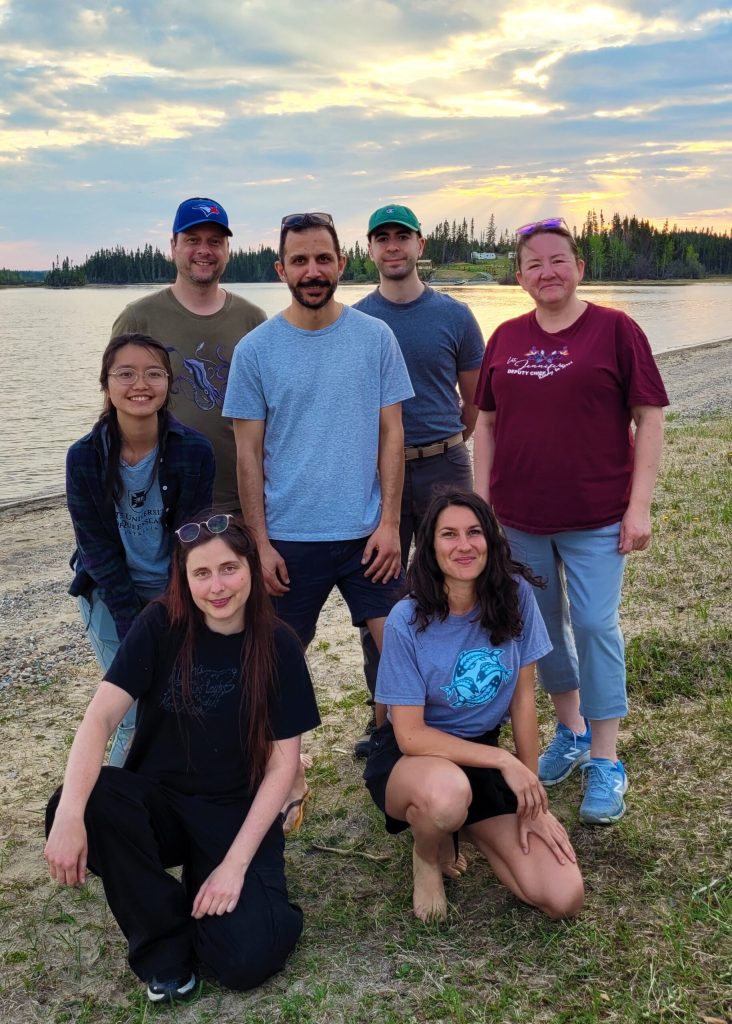
To address this challenge, a group of Mitacs interns joined the FISHES project – Fostering Indigenous Small-scale Fisheries for Health, Economy, and Food Security – a collaboration between Concordia University researchers and Eeyou Nations. These interns brought expertise in genomics to a project designed from the ground up around community needs and Indigenous co-management.
The interns focused on building tools to study the DNA of fish, using genomic analyses to understand how fish populations differ and adapt along the coast of Eeyou Istchee. In Waswanipi, for example, genomic analysis confirmed that a single walleye stock inhabits the river – essential baseline data for making sound management decisions. More broadly, the interns helped develop DNA monitoring approaches that could be used to protect fish as a food source in Mistassini Lake and to support long-term fisheries management across Cree coastal communities.
This work was intentionally designed in partnership with Eeyou Knowledge Keepers, Elders, community members, and local guides whose generations of ecological knowledge – passed down through stories, observation, and practice – shaped the research questions and informed the findings.
“Many of us still hunt, fish and trap as a way of life and still live off the land. Despite the fact our traditional territory continues to be fragmented by resource development, our connection to the land, the waters, the animals, our spiritual beliefs, is still very intense and efficient. Cree traditional activities continue to be applied based on the six Cree seasons and each season brings on a different way to practice our culture.”
– Allan Saganash (told by a lifelong hunter/trapper and Waswanipi Elder)
The results of this collaboration between Concordia University researchers and Eeyou Nations were significant. A twenty-year walleye monitoring program in Mistassini Lake detected declines in body size of up to 68% in mass in some rivers – validating concerns that Eeyou Knowledge Keepers had been raising for years. That evidence directly informed a Walleye Management Plan adopted in 2016. Subsequent monitoring has since shown early signs of body size stabilization, suggesting that the management actions may be working. In Waswanipi, genomic analyses also confirmed walleye stock in the river, providing essential baseline data for future management decisions.
Beyond research contributions, the collaboration also created employment and training opportunities for Eeyou youth as research assistants, building local capacity in fish monitoring techniques. Community-facing educational materials were developed to highlight the cultural, nutritional, and economic importance of fish to the Eeyou, helping bridge traditional ecological knowledge with Western science.
“The elders have an abundance of knowledge, from spawning times to fishing stories, and the changes they have witnessed over the years. By listening to their stories and what they have to say about conservation, management plans is an important step in overcoming the challenges facing fishes,” shared authors of the final report on this project, The Importance of Fish for The Cree Nation of Mistissini.
Together, these outcomes demonstrate how integrating Eeyou Knowledge with genomic and life-history data can guide sustainable resource management that serves both conservation goals and the cultural and food security needs of Eeyou communities.
For over 25 years, Mitacs has helped grow the economy and develop the workforce of tomorrow, connecting industry with academia and global partners to solve real-world challenges. We support business-academic research collaboration through internships, co-funded with businesses, for undergraduate to graduate students and post-doctoral fellows.
As a national innovation connector, Mitacs takes a talent-first approach to strengthen innovation capacity and drive global competitiveness. We serve as an essential research-commercialization bridge, accelerating market entry and growth for new products and services.
This is a critical time for Canada to think big and take bold action. Mitacs is ready to help build a strong and resilient Canadian economy, powered by ideas, talent and innovation.
Mitacs is funded by the Government of Canada, the Government of Alberta, the Government of British Columbia, Research Manitoba, the Government of New Brunswick, the Government of Newfoundland and Labrador, the Government of Nova Scotia, the Government of Ontario, Innovation PEI, the Government of Quebec, the Government of Saskatchewan, and the Government of Yukon.

Mitacs’s website content is created by people throughout our organization, united in their passion for innovation and eager to share their perspectives with others in the innovation ecosystem.
Discover more stories about Mitacs — and the game-changing innovations driven by students and postdocs.



Mitacs is funded by the Government of Canada, the Government of Alberta, the Government of British Columbia, Research Manitoba, the Government of New Brunswick, the Government of Newfoundland and Labrador, the Government of Nova Scotia, the Government of Ontario, Innovation PEI, the Government of Quebec, the Government of Saskatchewan, and the Government of Yukon.